The Ornament of the World Reflections
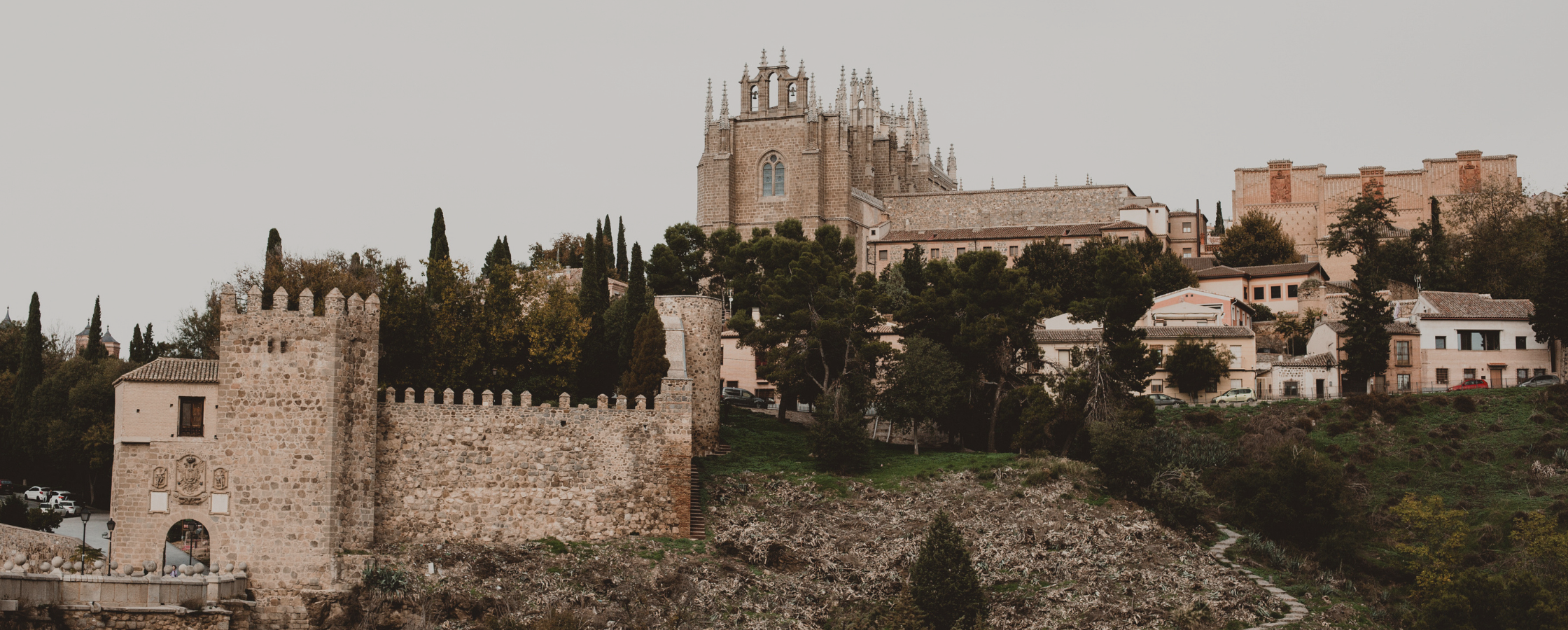
Toledo, 2024
The Ornament of the world (2002)
How Muslims, Jews, and Christians Created a Culture of Tolerance in Medieval Spain
by Maria Rosa Menocal
Summary:
A historical overview of La Convivencia, an 800-year period in medieval Spain when Muslims, Christians, and Jews cultivated a vibrant, tolerant culture of shared achievements in intellectual, scientific, and artistic fields. It highlights how this distinctive cultural harmony flourished mainly under Muslim rule before being destabilized by the emergence of a more intolerant, unified Christian dominance.
Why This Book?
I have been interested in the history of Spain ever since my visit in 2022. Much of English and French history is marked by conflict, but Spain has a unique history, shaped by distinct Roman influences. I was also fortunate to visit Toledo in 2024 and see firsthand the influence of all three faiths on the city.
Expectations?
I visited Toledo a couple of years ago and saw the influence of the three monotheistic religions on the old capital firsthand. I was hoping for a narrative history that would give me insight into Spanish history.
What stood out?
A surprising thread throughout the book was the importance of writing, books, and knowledge. So much of what made Córdoba, Toledo, and Granada the bright spots in Spain was not the presence of the royal family, but the library that housed the many translations scribes were endlessly trying to complete. Muslims were less daunted by the works of the secular minds that had made such great discoveries. Where the Christian nations would not print anything that lacked a religious basis or origin, Muslims were translating Euclid, Plato, Pliny the Elder, Socrates, and many others into their newly developed universal language, Arabic.
The rich web of attitudes about culture, and the intellectual opulence that it symbolized, is perhaps only suffused by the caliphate library of (by one count) some four hundred thousand volumes, and this at a time when the largest library in Christian Europe probably held no more than four hundred manuscripts.
What also stood out was the lack of limitation in education and knowledge. Where we find so many categories and distinctions nowadays, the goal was not to figure out what idea was right, but to document and preserve. There was an understanding of the value of having contradicting ideas rather than funneling all knowledge through the Latin microscope.
Just as essential to the social and cultural project embodied in those libraries was a series of attitudes about learning of every sort, about the duty to transmit knowledge from one generation to another, about the interplay between the very different modes of learning that were known to exist—modes that might contradict each other as faith and reason did, and do now. These sat happily in those libraries, side by side, unafraid of the contradictions, first-rate.
It struck me as an interesting pattern that Córdoba and Toledo thrived without a limitation on faith, but once Christianity was named the faith of the land, learning and education reverted to the old superstitions that anything not formed from the Christian faith was wrong. We have seen it in recent history and even today. Jews are usually the first targets, and then others. It is remarkable to me that the buildings near my house that are used for a Hebrew school or a mosque do not have signs, are nondescript, are completely fenced, and, in some cases, have security guards. All this in a so-called Christian country where we are supposed to love our neighbors as ourselves and love God above all else. Nowhere does it say to persecute those who don’t follow Christ. Terribly sad, to say the least.
Also, at the end of the book, there are moving stories about the importance of documenting and preserving what has been written. We are experiencing right now attempts to take down historic plaques, remove unsavory history from the curriculum, and limit the voices of writers who are seen as minorities or foreigners. These are not the actions of a vibrant, enlightened civilization, but one that wants to revert to superstition (conspiracy) and return to an age of fear.
Since when are libraries strategic military targets?
What was gained?
I wish I had read this book before my trip in order to fully grasp the beauty of a city with three faiths and how it thrived. I felt appreciation, for sure, and a sense of hope for what was and what could be again. For all the strife and division, there is an opportunity to recognize connection with one another. Even if there is disagreement in doctrine and specifics, can we not celebrate the belief in one God? Is there not commonality despite our differences?
“Does poetry - or language or philosophy or music or architecture, even that of our temples - really need to dance to the tune of our political beliefs or our religious convictions? Is the strict harmony of our cultural identities a virtue to be valued above others that may come from the accommodation of contradictions?”
This brings me back to Power and Thrones with the potent legacy of the crusades. Christian vs. Muslim. God’s Chosen vs. Infidel. This storyline has persisted for over a thousand years, and our media continues to promote this toxic idea of superiority and inferiority. It has been a reminder that, even as far back as medieval times, history has left a deep impression on the present, especially that which was done in the name of the Lord and even backed by the Church.